Home Blog Page 4

Wasay Shoaib Urdu Quotes – محبت وہ نہیں جو حاصل کرنے کے لیے کچھ بھی کر جائے

0
Wasay Shoaib Urdu Quotes

Wasay Shoaib Urdu Quotes – محبت وہ نہیں جو حاصل کرنے کے لیے کچھ بھی کر جائے

محبت وہ نہیں جو حاصل کرنے کے لیے کچھ بھی کر جائے”

“محبت تو وہ ہے جو محبوب کی خوشی کے لیے خود کو قربان کر دے۔

واسع  شعیب

یہ قول محبت کی اصل روح یعنی ایثار اور خلوص کو بیان کرتا ہے۔

Wasay Shoaib Urdu Quotes

English Description :

This powerful quote by Wasay Shoaib reflects the essence of selfless love, a theme often overshadowed in today’s world of instant gratification and possessive relationships. The quote translates to: “Love is not about doing anything to get the beloved. True love is about sacrificing oneself for the happiness of the beloved.”

In an age where love is frequently associated with possession and desire, this quote offers a much-needed shift in perspective. Wasay Shoaib Urdu Quotes often carry a profound emotional and philosophical depth, and this one is a beautiful reminder that love, in its truest form, is an act of giving rather than receiving.

True love is not demanding; it is understanding. It does not strive to capture or control but rather to liberate and bless. When a person truly loves someone, they are willing to put the beloved’s happiness above their own. They find peace not in having the beloved, but in seeing them content—even if it means letting go.

This quote resonates with those who have experienced unconditional love. It speaks to the heart of lovers, parents, friends, and anyone who has chosen compassion over selfishness. It’s not about how much you can gain from someone, but how much you’re willing to give—even your dreams, your comfort, or your presence—for their well-being.

This timeless wisdom from Wasay Shoaib distinguishes between superficial attraction and meaningful love. His quotes have become popular among Urdu-speaking audiences for their soulful messages and literary elegance. If you’re searching for Wasay Shoaib Urdu Quotes that deeply explore human emotions, this one is a prime example.

In relationships, this quote teaches us to value the other person’s peace above our ego. It is a call to genuine selflessness, something increasingly rare but desperately needed in our modern world.

Let this quote guide your heart and mind in all your emotional journeys. Whether you share it on social media, write it in a letter, or live by its message—it will make a difference.

 :اردو تفصیل

واسع شعیب کا یہ دل کو چھو لینے والا قول محبت کی اصل روح کی عکاسی کرتا ہے۔ آج کے مادہ پرست دور میں جہاں محبت کو صرف خواہشات کے حصول کا ذریعہ سمجھا جاتا ہے، وہاں یہ قول ہمیں سچی محبت کی پہچان کرواتا ہے۔ یہ ہمیں یاد دلاتا ہے کہ محبت صرف پانے کا نام نہیں، بلکہ قربانی، ایثار اور خلوص کا جذبہ ہے۔

سچی محبت وہ ہوتی ہے جو اپنی خوشی سے زیادہ محبوب کی خوشی کو ترجیح دے۔ جب انسان اپنے جذبات، خواہشات اور خودی کو کسی کی خوشی کے لیے قربان کر دے، تو وہی اصل محبت ہے۔ واسع شعیب کے الفاظ ہمیں یہ سکھاتے ہیں کہ اگر کوئی محبت صرف اپنی چاہت پوری کرنے کے لیے ہو، تو وہ خودغرضی ہے، نہ کہ محبت۔

یہ قول ان لوگوں کے لیے ایک پیغام ہے جو محبت میں خود کو کھو دینے کا ہنر جانتے ہیں۔ سچی محبت کبھی مجبور نہیں کرتی، بلکہ آزاد کرتی ہے۔ اگر محبوب خوش ہے تو عاشق بھی سکون میں ہے، چاہے وہ محبوب اُس کے پاس ہو یا نہیں۔

محبت کا حقیقی جذبہ انسان کو نرم دل، وفادار اور باکردار بناتا ہے۔ یہ قول انمول ہے، کیونکہ یہ ہمیں خود غرضی سے پاک محبت کی راہ دکھاتا ہے۔ یہ ایک ایسے معاشرے کی بنیاد رکھتا ہے جہاں جذبات کی قدر کی جاتی ہے، اور انسانیت کی خدمت کو محبت سمجھا جاتا ہے۔

واسع شعیب اردو اقوال میں ایک نمایاں نام ہے، اور ان کے الفاظ نسلوں تک دلوں کو چھوتے رہیں گے۔ اگر آپ بھی محبت کو سمجھنا چاہتے ہیں، تو اس قول کو دل سے اپنائیں۔

Ashfaq Ahmed Quotes – “دنیا میں اگر جینا ہے تو سچ بولو، ورنہ خاموش رہو۔”

2
Ashfaq Ahmed Quotes

Ashfaq Ahmed Quotes – “دنیا میں اگر جینا ہے تو سچ بولو، ورنہ خاموش رہو۔”

Ashfaq Ahmed Quotes

English Description :

This quote — “If you want to live in this world, speak the truth, or stay silent” — holds deep wisdom in its simplicity. In a world increasingly full of noise, lies, and half-truths, this message reminds us that truth and silence are the only dignified choices.

“To live in this world” does not simply mean to exist or survive, but to live with honor, integrity, and peace of mind. Speaking the truth is not always easy—it demands courage, principle, and sometimes personal sacrifice. But those who remain truthful build lasting respect, trust, and inner peace.

The second part, “or stay silent,” is equally significant. There are times when speaking may cause harm, mislead, or spark unnecessary conflict. In such moments, silence becomes wisdom. It is better to say nothing than to speak falsely or impulsively.

This quote teaches us:

  • Speak only when your words are true and beneficial.

  • Avoid gossip, slander, and false praise.

  • Do not speak merely to be heard—speak with purpose.

In the digital age, where everyone has a platform and speaking out has become effortless, this quote becomes even more relevant. Not every thought needs to be shared. Not every opinion needs to be voiced. Truth without compassion can be cruelty, and opinions without wisdom are noise.

This quote also promotes self-discipline. Controlling your tongue is often more difficult than controlling your actions. But it’s essential for maintaining healthy relationships, earning trust, and protecting your own integrity.

Whether in personal relationships, professional life, or public discourse, this quote offers a powerful principle: either contribute truth, or choose peace through silence.

It aligns with teachings found in many faiths and philosophies—truthfulness is virtue, and silence is safety.

 :اردو ڈسکرپشن

یہ قول ایک سادہ مگر بے حد بامعنی پیغام دیتا ہے: سچ بولنا یا خاموش رہنا۔ موجودہ دور میں جہاں جھوٹ، فریب، اور دوغلا پن عام ہوتا جا رہا ہے، یہ جملہ انسان کو یاد دلاتا ہے کہ عزت، سکون، اور کامیابی کی بنیاد سچائی پر ہے۔

“دنیا میں اگر جینا ہے” کا مطلب صرف سانس لینا نہیں بلکہ باوقار، پُرعزت، اور بامقصد زندگی گزارنا ہے۔ سچ بولنے کے لیے ہمت درکار ہوتی ہے، کیونکہ اکثر حق بات کڑوی ہوتی ہے اور بہت سے لوگ اسے سننے کے لیے تیار نہیں ہوتے۔ لیکن وہی لوگ جو سچائی پر قائم رہتے ہیں، وقت کے ساتھ سب کی عزت پاتے ہیں۔

اس قول میں “ورنہ خاموش رہو” کا حصہ بھی نہایت اہم ہے۔ بعض اوقات ہم ایسے حالات میں بولتے ہیں جب ہماری بات نقصان پہنچا سکتی ہے، کسی کا دل دکھا سکتی ہے، یا خود ہمیں مشکلات میں ڈال سکتی ہے۔ ان لمحات میں خاموشی اختیار کرنا حکمت اور دانائی کی علامت ہے۔

یہ قول ہمیں سکھاتا ہے کہ:

  • فضول باتوں سے پرہیز کریں

  • غیر ضروری بحث مباحثوں سے بچیں

  • سچائی کے بغیر کوئی بات نہ کریں

آج کے دور میں جب سوشل میڈیا پر ہر کوئی بول رہا ہے، تب یہ پیغام اور بھی اہم ہو جاتا ہے۔ اگر ہماری بات میں سچ نہیں، خیر نہیں، اور اصلاح کا مقصد نہیں — تو خاموش رہنا بہتر ہے۔

یہ قول اخلاقیات، تعلقات، تعلیم، اور روحانیت ہر میدان میں رہنمائی فراہم کرتا ہے۔ انسان کے کردار کی پہچان اس کی زبان سے ہوتی ہے، اور زبان کی طاقت سے بڑی کوئی تلوار نہیں۔ یہی وجہ ہے کہ اسلام اور دیگر مذاہب میں بھی سچ بولنے اور غلط بات سے پرہیز پر زور دیا گیا ہے۔


دیار عشق میں اپنا مقام پیدا کر – Allama Iqbal Poetry Quotes

0

دیار عشق میں اپنا مقام پیدا کر –  Allama Iqbal Poetry Quotes

دیار عشق میں اپنا مقام پیدا کر

نیا زمانہ نئے صبح و شام پیدا کر

دیار عشق میں اپنا مقام پیدا کر

نیا زمانہ نئے صبح و شام پیدا کر


علامہ محمد اقبال


English Description:

This inspirational couplet by Allama Muhammad Iqbal, the poet of the East and philosopher of selfhood (Khudi), urges the youth and seekers of purpose to create their own identity in the realm of love and devotion. “Diyār-e-Ishq” (the land of love) refers not only to romantic love but also to divine love, passion for truth, and dedication to a higher cause. Iqbal calls upon the individual to rise above mediocrity and carve out a place through courage, vision, and passion.

The line “Create your place in the realm of love” reminds us that true recognition comes from walking a path of sincerity, commitment, and inner power. In this world of constant change and challenge, the poet advises us to become agents of transformation—to not only adapt to new times but to shape them.

“Create a new era, new mornings and evenings”—this is a call for innovation, creativity, and leadership. Iqbal believed in the power of Khudi—the awakening of the self—as the true engine for societal reform and progress. This verse, thus, becomes a timeless motivational message to take control of destiny and not passively wait for miracles. It teaches us to become creators of new realities and architects of a better world.


Urdu Description:

یہ پراثر اور ولولہ انگیز شعر علامہ محمد اقبالؒ کا ہے، جو خودی، عشق اور حرکت کے شاعر تھے۔ وہ نوجوانوں کو، اور ہر اس شخص کو جو اپنی زندگی میں مقصد اور معنی تلاش کر رہا ہو، مخاطب کرتے ہیں

“دیارِ عشق میں اپنا مقام پیدا کر” — یعنی محبت، سچائی، اور اعلیٰ مقصد کے سفر میں اپنی پہچان خود بنا۔

یہ عشق صرف رومانوی نہیں بلکہ اللہ کی محبت، سچ کے لیے جذبہ، اور انسانیت کی خدمت کا جذبہ ہے۔

اقبال کہتے ہیں کہ دنیا میں مقام وہی پاتا ہے جو خلوص، ہمت، اور بصیرت کے ساتھ سفر کرتا ہے۔ وہ ہمیں سستی، بے حسی، اور تقلید سے نکال کر تبدیلی کے معمار بننے کی دعوت دیتے ہیں۔

“نیا زمانہ، نئے صبح و شام پیدا کر” — یعنی صرف وقت کے بہاؤ کا حصہ نہ بن، بلکہ خود وقت کو نیا رنگ دے۔ اپنی سوچ، ہنر، اور ارادے سے نئی دنیائیں پیدا کر۔

یہ شعر آج کے نوجوان، اساتذہ، رہنما، اور ہر حساس دل رکھنے والے انسان کے لیے مشعلِ راہ ہے۔ یہ ہمیں بتاتا ہے کہ انقلاب اندر سے آتا ہے، اور عظمت وہی حاصل کرتا ہے جو خود تبدیلی بن جائے۔

“Success usually comes to those who are too busy to be looking for it.” — Henry David Thoreau

0

“Success usually comes to those who are too busy to be looking for it.” — Henry David Thoreau

“Success usually comes to those who are too busy to be looking for it.”

— Henry David Thoreau

Description:

This profound quote by Henry David Thoreau, the American philosopher, poet, and transcendentalist thinker, captures an essential truth about the nature of achievement: success is not something that should be pursued as a goal in itself—it is a byproduct of dedication, focus, and meaningful work.

Thoreau’s words remind us that success is most often attained not by those who chase it obsessively, but by those immersed in purpose-driven action. When you’re deeply engaged in something that matters—your craft, your mission, your growth—you lose the need to constantly seek validation or recognition. Ironically, it is in this state of absorption that true success quietly arrives.

The Power of Purposeful Work

“Too busy to be looking for it” is a powerful phrase. It speaks of people who are consumed with doing—not dreaming, boasting, or endlessly planning. These are individuals who wake up with intention, who pour their energy into building, learning, or serving. They’re not scanning the horizon for accolades—they’re working in the present, and that very effort becomes the foundation of their eventual success.

This approach to success encourages discipline over desire, action over obsession. Thoreau, who lived deliberately and wrote extensively about self-reliance and simplicity, understood the value of deep work. In a world that often glorifies overnight fame and quick results, this quote is a grounding reminder that real success comes quietly to those who keep showing up and doing the work.

Letting Go of the Outcome

At the core of this quote is the idea that success cannot be forced. When we become fixated on results, we often compromise the quality of our efforts. Our focus shifts from doing our best to getting noticed. Thoreau flips that mindset—focus on doing good work, and the results will follow naturally.

This doesn’t mean that ambition or goals are bad. It means that healthy ambition is rooted in passion and purpose, not in the anxiety of recognition. When you love the work for its own sake, when you’re in flow, success becomes a natural consequence.

Timeless Relevance

This quote remains deeply relevant in today’s fast-paced world. In a culture obsessed with followers, metrics, and visibility, many chase success as a status symbol. Thoreau’s wisdom tells us to slow down and do what matters—not for likes, but for legacy.

Whether you’re an artist painting in solitude, an entrepreneur building behind the scenes, or a teacher shaping young minds, your impact grows not from seeking fame, but from being fully engaged in your purpose.

Practical Application

Here are ways to live this quote in your daily life:

  • Commit to your work fully. Be so involved that time disappears.

  • Focus on the process, not just the reward.

  • Let passion guide your path—not popularity.

  • Measure success by progress, not applause.

  • Resist distractions that pull your focus from meaningful efforts.

Conclusion

“Success usually comes to those who are too busy to be looking for it.” Henry David Thoreau’s quote is more than a piece of advice—it’s a life philosophy. It encourages us to invest ourselves in what truly matters and to trust that success will come when we are ready, not when we are desperate.

In the end, it’s not about chasing success—it’s about becoming someone worthy of it. The reward lies in the journey, the dedication, and the quiet fulfillment of doing what you love, every single day.


**”Liberté, égalité, fraternité” (Liberty, equality, fraternity) — French Revolutionary Motto

0


**”Liberté, égalité, fraternité” (Liberty, equality, fraternity)

French Revolutionary Motto


“Liberté, égalité, fraternité” (Liberty, equality, fraternity) — French Revolutionary Motto

“Liberté, égalité, fraternité” — translated as “Liberty, equality, fraternity” — stands as one of the most iconic and powerful slogans in human history. Born during the tumultuous days of the French Revolution, this simple yet profound phrase encapsulates the ideals that sparked radical transformation not only in France but across the modern world. It continues to inspire movements for justice, democracy, and human rights even centuries later.

More than just a political motto, “Liberty, equality, fraternity” is a moral compass — a vision of what society could be when built upon mutual respect, freedom, and shared humanity. It is a rallying cry for dignity, a call to conscience, and a reminder that progress rests not just on power or policy, but on principles.


The Birth of a Motto in Revolution

The phrase first gained prominence during the French Revolution in the late 18th century, a period marked by the fall of the monarchy, widespread civil unrest, and the reimagining of government and society. In a world where monarchs ruled with unchecked authority and class divisions were sharp and cruel, the people of France rose up to demand their rights.

“Liberty, equality, fraternity” became a banner under which revolutionaries could unite. It succinctly expressed the foundational goals of the revolution — freedom from tyranny, equal treatment for all citizens, and a sense of solidarity that transcended individual interest. The slogan was inscribed on public buildings, shouted in protest, and used to guide the drafting of new laws and institutions.


Liberty: The Right to Live Free

The first word, liberté, or liberty, speaks to the most basic human right — the freedom to live without oppression. Liberty means being able to think, speak, worship, and act without fear of unjust punishment or control. In revolutionary France, this meant ending the authoritarian rule of the king and aristocracy, and empowering the people through democratic institutions.

But liberty extends beyond politics. It also means the ability to choose one’s own path — to learn, create, explore, and grow. It is the foundation upon which all other human aspirations rest. Without liberty, society becomes a cage; with it, people become capable of greatness.


Equality: Justice for All

Égalité, or equality, addresses a different but equally vital concern — the fair treatment of all people regardless of birth, wealth, religion, or class. Before the Revolution, French society was rigidly hierarchical. The nobility and clergy enjoyed privileges while peasants and commoners bore the burdens. Revolutionaries rejected this unfairness and demanded a new social order based on equal rights and opportunities.

Equality doesn’t mean sameness; it means fairness. It means that laws apply to everyone equally, that opportunity is not hoarded by the powerful, and that every person, regardless of background, has value. In today’s world, égalité remains a crucial concept in the fight against discrimination, economic injustice, and systemic bias.


Fraternity: The Power of Solidarity

Fraternité, or fraternity, may be the most poetic and profound of the three. It calls for brotherhood — a deep, enduring sense of connection among citizens. Fraternity means more than cooperation; it speaks to shared purpose and mutual care. It reminds us that we are not isolated individuals, but members of a larger human family.

Fraternity was essential during the Revolution, as it encouraged unity in the face of immense danger and upheaval. But even now, it speaks to our need for community. It asks us to lift each other up, to fight not just for our own rights but for the rights of others. It demands empathy, generosity, and collective strength.


A Timeless Message

Though forged in the fires of revolution more than 200 years ago, “Liberté, égalité, fraternité” remains strikingly relevant today. In times of political division, inequality, and global uncertainty, this phrase reminds us what civilization should strive for. It continues to guide movements for democracy, civil rights, gender equality, and social justice around the world.

In schools, courts, parliaments, and protests, the motto lives on. It is a vision not just for France, but for humanity — a society where everyone is free, treated fairly, and bound together by shared respect.


Applying the Motto to Modern Life

“Liberty, equality, fraternity” isn’t just a historical phrase; it can shape our personal lives too. We can live with liberty by speaking our truth and pursuing our passions. We can honor equality by standing against discrimination and advocating for fairness in our communities. And we can practice fraternity by helping others, showing compassion, and building inclusive spaces.

Whether we are teachers, artists, activists, or parents, this motto offers a framework for ethical living. It urges us to be brave, to be fair, and above all, to be kind.


Conclusion

“Liberté, égalité, fraternité” is more than a slogan — it’s a philosophy of life. It reminds us that the foundation of any just society rests on freedom, fairness, and unity. While born in revolution, its message is enduring, universal, and deeply human. In a world still battling injustice and division, it stands as a light — showing us not just what we can achieve, but who we are at our best.

Let this motto guide you in your words, your work, and your worldview. For when liberty, equality, and fraternity thrive, so too does humanity.

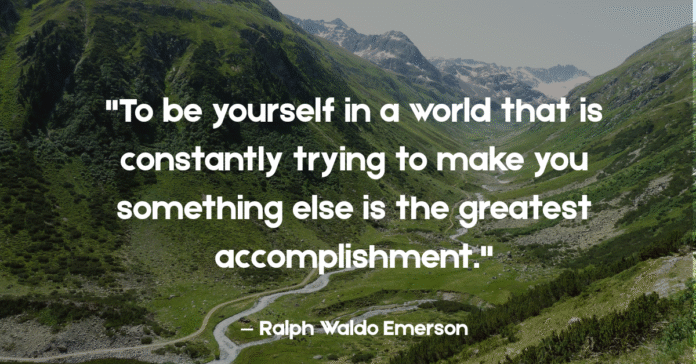
“To be yourself in a world that is constantly trying to make you something else is the greatest accomplishment.” — Ralph Waldo Emerson

0

“To be yourself in a world that is constantly trying to make you something else is the greatest accomplishment.”

“To be yourself in a world that is constantly trying to make you something else is the greatest accomplishment.”

Ralph Waldo Emerson

Ralph Waldo Emerson’s timeless quote, “To be yourself in a world that is constantly trying to make you something else is the greatest accomplishment,” is more than just an observation—it’s a declaration of inner strength. In an era where conformity is often rewarded and individuality discouraged, Emerson reminds us that staying true to oneself is not only difficult, but also profoundly courageous.

This quote stands as a beacon for authenticity, self-worth, and personal growth. It challenges us to question the roles, labels, and expectations that society imposes on us. In a world that promotes trends over truth and imitation over individuality, Emerson’s words call us to return to our core identity.


The Pressure to Conform

From a young age, society teaches us how to behave, think, and even feel. We’re often told who to be—through education, media, peer groups, cultural norms, and sometimes even our families. Success is often measured by how well we fit in, not by how boldly we stand out.

Whether it’s pressure to dress a certain way, follow a specific career path, or adopt popular opinions, the push to conform is ever-present. It’s subtle yet powerful, creating a tension between who we truly are and who we’re expected to be.

Emerson’s quote acknowledges this reality. It recognizes the immense challenge of retaining your identity in the face of constant influence. But rather than give in, it uplifts those who have the courage to resist and remain true to themselves.


Authenticity as a Radical Act

In many ways, being yourself is a quiet form of rebellion. It’s choosing to value your inner voice above external noise. It’s refusing to shrink or shift in order to be accepted. It’s being honest in a world that often rewards performance over truth.

Authenticity means knowing your values, embracing your quirks, acknowledging your flaws, and standing firm in your beliefs—even when it’s unpopular or uncomfortable. It’s not about being perfect; it’s about being real.

Emerson, a leading figure in the transcendentalist movement, believed deeply in self-reliance and inner wisdom. His writings consistently championed the idea that every individual holds divine potential and that trusting yourself is the first step to living a meaningful life.


Why It’s the Greatest Accomplishment

Why does Emerson call it “the greatest accomplishment”? Because it demands courage. It requires self-awareness, strength, and persistence. In a world full of comparisons, criticisms, and expectations, staying true to who you are can feel like swimming against the tide.

This accomplishment is not measured in wealth, fame, or accolades. It’s internal. It’s waking up every day with integrity. It’s building a life that reflects your truest self. It’s being able to look in the mirror and say, “This is me, and I’m proud of who I’ve become.”

Remaining authentic is often the result of many quiet decisions: saying no when you’re expected to say yes, walking away from things that don’t align with your values, or speaking your truth even when it’s risky. Each choice, however small, contributes to a larger, braver life.


Relevance in Today’s World

This quote is especially relevant in today’s digital age. Social media constantly bombards us with curated versions of other people’s lives. The pressure to appear successful, beautiful, happy, or perfect is immense. In this environment, being yourself feels both harder—and more important—than ever.

Mental health challenges, identity struggles, and social anxiety often stem from trying to meet impossible standards. Emerson’s words offer a grounding reminder: your authenticity is your power. You don’t have to be like anyone else to be worthy or successful. You just have to be you.


Living the Quote Daily

So how can we embody this quote in everyday life?

  • Start with self-awareness. Spend time understanding your values, beliefs, and desires.

  • Be mindful of external influences. Notice when you’re acting to please others versus honoring yourself.

  • Practice saying no to things that don’t align with who you are.

  • Surround yourself with people who support your true self, not just your surface self.

  • Celebrate your uniqueness. What makes you different is also what makes you strong.

These steps may seem simple, but living them requires daily intention. The world will continue trying to mold you. The challenge—and reward—is choosing to remain who you truly are.


Conclusion

“To be yourself in a world that is constantly trying to make you something else is the greatest accomplishment.” With this one sentence, Ralph Waldo Emerson captures the essence of self-worth and the power of authenticity. It’s a quote that transcends time and culture, resonating with anyone who has ever felt the pressure to conform or the fear of rejection.

In the end, Emerson reminds us that living authentically is not a weakness—it is strength. It is not arrogance—it is wisdom. And it is not a luxury—it is a necessary act of self-preservation. The journey to be yourself is lifelong, but it is also the most meaningful journey you’ll ever take.

“The only thing we have to fear is fear itself.” — Franklin D. Roosevelt

0
Franklin D. Roosevelt

“The only thing we have to fear is fear itself.”

“The only thing we have to fear is fear itself.” — Franklin D. Roosevelt

This timeless declaration by Franklin D. Roosevelt, the 32nd President of the United States, resonates through the corridors of history as a call to courage in the face of uncertainty. Spoken during his first inaugural address in 1933, amidst the Great Depression, Roosevelt’s words were not just political rhetoric—they were a lifeline to a nation paralyzed by economic collapse and despair. In this single line, Roosevelt redefined the narrative around fear, shifting focus from external conditions to internal resilience.

Understanding the Context

To truly appreciate the power of this quote, it’s important to understand the context in which it was delivered. America was reeling from the devastating impact of the Great Depression. Banks had failed, unemployment soared, and hope was in short supply. People weren’t just worried—they were terrified. Into this bleak landscape, Roosevelt stepped forward and reminded the country that fear itself was the real enemy—not poverty, not economic instability, not hardship.

His message was clear: fear cripples action. It exaggerates danger and saps the will to respond. By naming fear as the true threat, Roosevelt offered not only insight but also empowerment. The people could do something—they could choose courage.

The Psychology of Fear

Fear is a natural response to perceived danger. It can serve a protective purpose, but unchecked, it becomes a prison. Roosevelt’s assertion was radical because it acknowledged a powerful psychological truth: much of our suffering stems not from events themselves, but from our reaction to them.

Modern psychology confirms this. Fear triggers the fight-or-flight response, narrowing focus, increasing anxiety, and often causing paralysis. But when we learn to name our fears, to recognize them, and to move through them, we regain control. That is the essence of Roosevelt’s message: do not be ruled by fear—face it, and you will find power on the other side.

A Message for Every Generation

Though spoken nearly a century ago, Roosevelt’s words remain profoundly relevant. Whether we are facing personal crises, global pandemics, political unrest, or economic turbulence, the temptation to be consumed by fear persists. But fear rarely leads to wise decisions—it creates urgency without clarity, and often makes bad situations worse.

Roosevelt’s wisdom invites us to pause and examine our fears. Are they real, or are they magnified by our imaginations? Are we reacting out of panic, or are we responding with purpose? In a world driven by headlines and hysteria, this quote is a reminder to center ourselves, to look beyond fear, and to act with reason and resilience.

Empowerment Through Courage

One of the most inspiring aspects of this quote is how it transforms the listener. Instead of blaming external forces, it calls for inner strength. It reframes the narrative from victimhood to agency. By saying “the only thing we have to fear is fear itself,” Roosevelt doesn’t dismiss the challenges of the time—he acknowledges them—but insists that our mindset is the first battlefield.

This shift empowers people to act. It tells the struggling farmer, the unemployed worker, the anxious student, or the grieving parent: your feelings are valid, but they do not have to rule you. You have within you the courage to face this. And that is more powerful than any circumstance.

Application in Personal Life

In everyday life, this quote can serve as a mantra for overcoming self-doubt and anxiety. Fear keeps people from taking important steps: applying for a job, starting a business, speaking their truth, or chasing a dream. But often, the fear of failure is more daunting than failure itself.

To apply Roosevelt’s insight, one can:

  • Identify what they are afraid of. Is it rejection, embarrassment, loss?

  • Question the reality of that fear. Is it based on facts or assumptions?

  • Take one small action in defiance of fear. Progress is a powerful antidote.

  • Surround themselves with supportive voices and avoid fearmongering environments.

By doing so, we begin to diminish fear’s grip and reclaim our freedom.

Leadership and Legacy

Roosevelt’s leadership during one of America’s darkest chapters stands as a testament to the power of words and mindset. He did not offer false hope. He acknowledged suffering while also reminding people of their strength. That’s why this quote endures—it is not just historical; it is deeply human.

Every leader, parent, teacher, or mentor can draw from this quote. It reminds us that guiding others through fear is not about having all the answers, but about instilling courage. It tells us that even when the future is uncertain, our inner resolve can light the way forward.

Conclusion

“The only thing we have to fear is fear itself.” This quote is not merely a historical artifact—it is a living truth. In every age and in every life, fear will appear. But we are not powerless. Roosevelt reminds us that our response to fear defines the outcome.

When we choose courage, we open the door to solutions, to healing, and to transformation. Fear may knock, but it does not have to stay. And once we understand that, we begin to live not in reaction to fear, but in the freedom of hope and action.

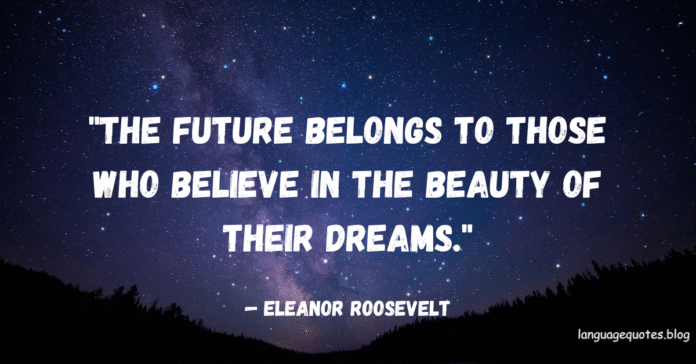
“The future belongs to those who believe in the beauty of their dreams.”— Eleanor Roosevelt

0
Eleanor Roosevelt Quotes

“The future belongs to those who believe in the beauty of their dreams.”
— Eleanor Roosevelt

This timeless quote by Eleanor Roosevelt, former First Lady of the United States and a tireless human rights advocate, speaks to the powerful link between vision, belief, and destiny. It’s a call to dream boldly and to honor those dreams with unwavering belief. At its heart, this quote reminds us that progress—personal or societal—begins with the courage to imagine a better future and the belief that we can help create it.

The Power of Dreams

Dreams are not idle fantasies. They are the seeds of action, the blueprints for progress, and the sparks that ignite revolutions—both internal and external. When Roosevelt talks about “the beauty of their dreams,” she emphasizes not just any dream, but those that inspire, elevate, and serve a greater purpose. Beautiful dreams are not only personal ambitions; they include visions for community, change, growth, and humanity.

Every major achievement in history—from social movements to scientific discoveries—began as someone’s dream. The dream of flying led to airplanes, the dream of justice led to civil rights movements, and the dream of understanding led to education and literacy efforts across the world. Dreams are how the future takes shape.

Belief Makes the Difference

Belief is the force that transforms a dream from a distant idea into a living pursuit. Many people dream, but only those who believe in their dreams take steps to pursue them, even when it’s hard. Eleanor Roosevelt didn’t just speak about dreaming—she lived it. From advocating for the Universal Declaration of Human Rights to reshaping the role of First Lady into one of activism and leadership, she believed deeply in the causes she championed.

Belief gives dreams their weight. It builds resilience when progress is slow and creates momentum even when others doubt. When we truly believe in our dreams, we are more likely to act, to persist, and to innovate. We begin to shape our actions, decisions, and surroundings according to that vision. The dream becomes part of our identity, not just a wish.

The Role of Courage and Vision

Believing in the beauty of your dreams takes courage. Society often rewards conformity and pragmatism over creativity and idealism. Dreamers are sometimes mocked, dismissed, or misunderstood—until they succeed. The courage to dream is often the first rebellion against the status quo. Eleanor Roosevelt was no stranger to this. She pushed boundaries for women’s roles, spoke out against racial injustice, and redefined what it meant to be a political figure.

Belief in your dreams also implies vision—the ability to see something that does not yet exist. This vision becomes a guiding light, offering direction when the road is uncertain. People with vision are often the leaders, the innovators, the changemakers.

Relevance Across All Walks of Life

This quote applies to every area of life:

  • Students: It encourages young people to dream big—about education, career, impact—and to believe that their effort and imagination can shape their future.
  • Entrepreneurs: It validates the boldness of launching something new, urging persistence through setbacks and challenges.
  • Artists and Creators: It affirms the importance of creative visions and the emotional power of beauty and authenticity.
  • Activists and Leaders: It inspires long-term commitment to causes and ideals, reminding them that belief is the first step toward change.
  • Anyone in a transition: It serves as a quiet voice of hope during times of uncertainty, reminding you that your future is still yours to build.

Psychology and Science Behind It

Modern psychology backs up Roosevelt’s wisdom. Research on self-efficacy—the belief in one’s ability to achieve goals—shows that belief directly impacts motivation, performance, and resilience. People who visualize and believe in their goals are more likely to reach them. The law of expectation also suggests that what we expect to happen often becomes reality, not due to magic, but because expectations influence behavior.

Dreams, when combined with belief, activate the brain’s goal-setting systems, release motivational neurotransmitters like dopamine, and help individuals stay focused through obstacles. In other words, when you believe in your dream, your brain actually works harder to make it happen.

Making the Quote Real in Daily Life

To live by this quote means turning dreaming and believing into habits. Here are some practical ways to do that:

  • Write down your dreams. Whether personal or professional, give them form and visibility.
  • Repeat affirmations that remind you of your potential and vision.
  • Surround yourself with people who uplift your dreams, not those who discourage them.
  • Take one small step daily toward your dream, no matter how minor. Action fuels belief.
  • Visualize success, but also be open to detours. The dream may evolve, but the beauty remains.

Conclusion

“The future belongs to those who believe in the beauty of their dreams.” These words, spoken by a woman who helped shape the course of the 20th century, serve as a powerful truth for all generations. Eleanor Roosevelt didn’t simply talk about dreaming—she modeled it in the way she lived, spoke, and acted.

Whether your dream is to change the world, build a family, start a business, or become the best version of yourself, your belief is what sets the future in motion. Believe with your whole heart, because the future is waiting—for those who dare to dream and have the courage to chase the beauty within them.

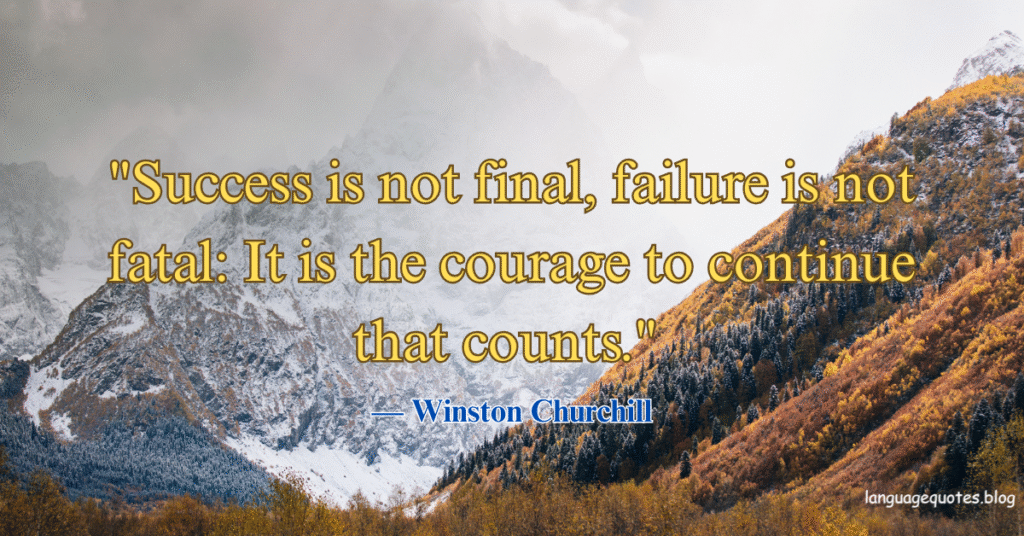
“Success is not final, failure is not fatal: It is the courage to continue that counts.”— Winston Churchill

0
Winston Churchill Quotes

“Success isn’t final, failure isn’t fatal: It is the courage to continue that counts.”
Winston Churchill

This enduring quotation by Winston Churchill, one of the most influential leaders in history, serves as a powerful reminder that life is not defined by a single victory or defeat. Rather, it is shaped by resilience, perseverance, and the unwavering will to keep moving forward. Churchill, who led Britain through its darkest hours during World War II, understood better than most that progress is rarely a straight path. Success can be fleeting, and failure is often inevitable—but what truly matters is the courage to press on.

This quote resonates across generations, professions, and personal struggles because it speaks to a universal truth: success and failure are temporary, but perseverance is eternal.


The Temporary Nature of Success

“Success isn’t final” is a humbling reminder that achieving your goals—no matter how grand they may be—doesn’t signal the end of your journey. Too often, people believe that reaching success marks a finish line. In reality, it’s merely a milestone. Resting too long on your accomplishments can lead to stagnation, and in a world that constantly evolves, yesterday’s success may not sustain you tomorrow.

Churchill’s words encourage us to view success as a step, not a destination. Whether it’s a business win, an academic achievement, or a personal breakthrough, every success brings new challenges. Sustaining it requires continuous effort, learning, and adaptability.


The Lessons Within Failure

“Failure isn’t fatal.” These four words bring hope to anyone who has stumbled or fallen short. Failure is not the end of your story. It isn’t a final judgment on your worth or potential. Instead, it’s a crucial part of the learning process. Every failure carries a lesson—if you’re open to finding it.

Churchill himself experienced many political defeats. He was voted out of office, criticized for decisions, and doubted by many. Yet he never let failure define him. Instead, he treated each setback as a lesson, a step toward becoming stronger and more prepared. That mindset—learning from failure rather than fearing it—is key to achieving long-term success.


Courage Is the Constant

“It is the courage to continue that counts.” This is the heart of Churchill’s message. Success and failure are both transient, but courage is the constant that sustains us through all of it. Courage doesn’t mean being fearless; it means taking action even when fear is present. It’s the inner strength that fuels persistence.

This quote calls on each of us to cultivate that kind of courage. Whether you’re navigating a career challenge, overcoming personal hardship, or facing the unknown, what truly matters is the decision to keep going.


Relevance in All Areas of Life

Churchill’s wisdom applies across every facet of life:

  • In education, it reminds students that a bad grade isn’t the end, and even top marks aren’t the final goal.
  • In business, it encourages entrepreneurs to embrace setbacks as part of innovation and growth.
  • In personal development, it teaches that real success comes not from never failing, but from rising after each fall.
  • In mental health, the quote offers deep comfort. For those battling depression, anxiety, or trauma, continuing each day is an act of quiet, powerful bravery.

In each context, the quote serves as a guide for how to endure—and thrive—through ups and downs.


Changing Your Perspective

One of the most transformative aspects of this quote is its ability to shift our mindset. Society often portrays success and failure as binary opposites—either you’ve made it or you’ve failed. Churchill reminds us that both are fleeting, and that our attitude toward them is what truly matters.

By adopting this mindset, we free ourselves from the fear of failure and the pressure of perfection. It empowers us to take risks, grow through mistakes, and keep moving toward our goals.


Practical Ways to Apply This Quote

Here are simple, practical steps to bring Churchill’s wisdom into your daily life:

  • Redefine success as a lifelong journey. Celebrate wins, but remain open to growth.
  • Reframe failure as valuable feedback. Ask yourself, “What can I learn? How can I improve?”
  • Build resilience through healthy routines—exercise, mindfulness, journaling, or regular reflection.
  • Surround yourself with support—mentors, friends, and communities who encourage persistence.
  • Practice courage by doing small, brave things daily—speaking up, starting something new, or simply getting up after a tough day.

Conclusion

“Success isn’t final, failure isn’t fatal: It is the courage to continue that counts.” Winston Churchill’s words go beyond inspiration—they offer a practical philosophy for living. Whether you’re riding the highs of success or weathering the storms of defeat, remember that neither condition is permanent. What defines your journey is the strength to continue moving forward.

So when you face uncertainty, rejection, or exhaustion, let these words guide you. Your courage to take the next step may be the most powerful tool you have. And in that act of continuing, you embody the very essence of resilience.

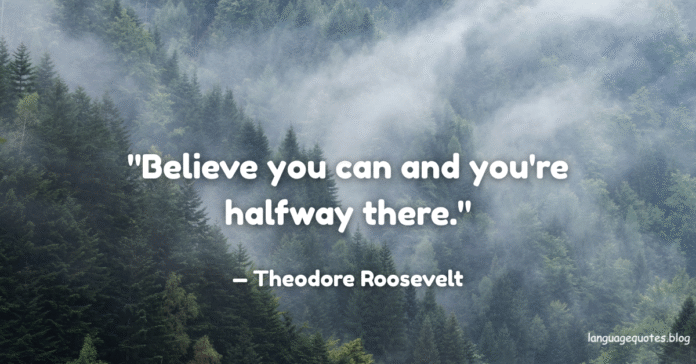
“Believe you can and you’re halfway there.”— Theodore Roosevelt

0
Theodore Roosevelt Quotes

“Believe you can and you are halfway there.”
Theodore Roosevelt

This iconic quote by Theodore Roosevelt, the 26th President of the United States and a man known for his fearless leadership and unshakable will, is a timeless reminder of the power of belief. In just a few words, Roosevelt captures the essence of personal empowerment and the central role that self-confidence plays in every journey toward success.

In a world where challenges often feel overwhelming and the road ahead uncertain, these words serve as a call to courage and conviction. Before any great achievement can begin, and before any mountain can be climbed, the most essential step is believing in yourself.

The Power of Belief

At its core, this quote is about mindset. “Believe you can” is more than just positive thinking—it’s a declaration of inner readiness. Roosevelt understood that many of the battles we face are not with the outside world, but within our own minds. Doubt, fear, and hesitation often stop us before we even begin. When you believe you are capable, you unlock motivation, resilience, and clarity. It sets the wheels of action in motion.

The phrase “and you are half there” emphasizes that belief alone is already progress. It becomes the foundation on which all further actions are built. Without belief, even the best plans fall apart; with it, even uncertain efforts gain momentum.

The Psychology of Confidence

Modern psychology supports Roosevelt’s insight. Research shows that self-efficacy—the belief in one’s ability to succeed—is closely linked to actual performance. People who believe in their ability to achieve a goal are more persistent, creative, and resourceful. This belief shapes how they respond to challenges; instead of giving up, they adapt and keep going.

Roosevelt’s quote speaks directly to this truth: confidence isn’t just a feel-good idea—it’s a real tool. Whether you’re starting a business, pursuing a dream, healing from hardship, or trying to grow, belief is the fuel that powers each forward step.

Starting Is the Hardest Part

One reason this quote resonates with so many is because it addresses the most difficult phase of any journey: the beginning. Starting something new—a career path, a relationship, a personal habit, or a creative project—can feel daunting. You don’t know how it will turn out. You may feel unqualified, uncertain, or alone.

But Roosevelt reminds us that the moment you choose to believe in yourself, you’ve already cleared a major obstacle. Getting “half there” doesn’t require perfection—it only requires willingness. Saying “Yes, I can,” even when you don’t know how yet, is enough to begin.

Action Through Encouragement

Roosevelt’s leadership was bold and action-driven. He valued personal responsibility, courage, and inner strength. This quote reflects those values. It empowers individuals to take ownership of their progress and recognize that the starting point lies within.

It also encourages self-kindness. Instead of harsh inner criticism, we should offer ourselves encouragement. That voice that says, “I can do this,” is more than reassuring—it’s necessary. It rewires our minds for growth, progress, and possibility.

Overcoming Self-Doubt

Self-doubt is the silent destroyer of dreams. It convinces us we’re not ready, not smart enough, not good enough. But Roosevelt knew that courage is not the absence of fear—it is moving forward in spite of it. His quote is a powerful antidote to self-doubt. By choosing to believe, you weaken fear’s control.

Confidence doesn’t mean you’re sure of success—it means you’re willing to try. And each step forward makes belief stronger, more real, and more influential.

Practical Application

How can you live by this quote? Try these practices:

  • Start each day with a personal affirmation: “I believe I can.” This builds mental strength.
  • Break your goals into small steps, and begin with just one. Action reinforces belief.
  • Visualize success. See yourself accomplishing your goals and act in harmony with that image.
  • Surround yourself with supportive voices—people who reflect and reinforce your potential.
  • Celebrate small victories. Every win proves your belief was not misplaced.

When belief becomes a habit, confidence grows. And when confidence grows, progress accelerates.

Conclusion

“Believe you can and you are half there.” These words, from a leader who overcame illness, political setbacks, and personal trials, are a rallying cry for anyone beginning something new. Roosevelt teaches us that belief is not just a starting point—it is momentum.

No matter how big your dream or how steep the climb, the first true victory happens in your mind. Once you believe in your own ability, the path becomes clearer. You might not have all the answers yet, but with belief, you are already halfway there.